DNA Sample Collection
Introduction
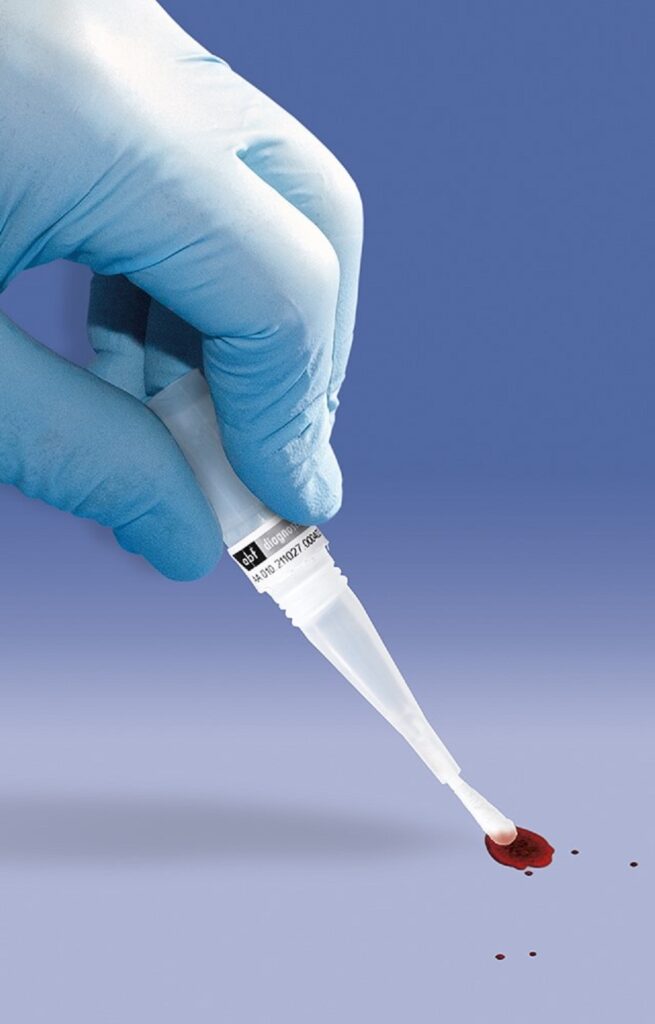
A perpetrator’s DNA can be obtained from a wide variety of trace materials, such as blood, semen, or saliva, but also from skin cells or hair roots. Various tools and techniques are used to secure biological traces at the crime scene. DNA-containing sample material can be secured by rubbing a trace with DNA-free swabs. Adhesive films or adhesive stamps are used for very rough or porous surfaces (e.g. textiles).
As methods for analyzing forensic evidence have improved, the requirements for evidence collection tools have also increased. Today, all tools used for evidence collection are manufactured under clean room conditions and by default sterilized with ethylene oxide.
Today, cotton swabs must not only be delivered DNA-free, but must also ensure that the material obtained is preserved as quickly as possible after collection and protected from contamination during transport and storage. Preservation is achieved by quickly drying a sample. A distinction is made here between active and passive drying.
Methods for DNA Sample Collection
Swab in Combination with a Carrier Box
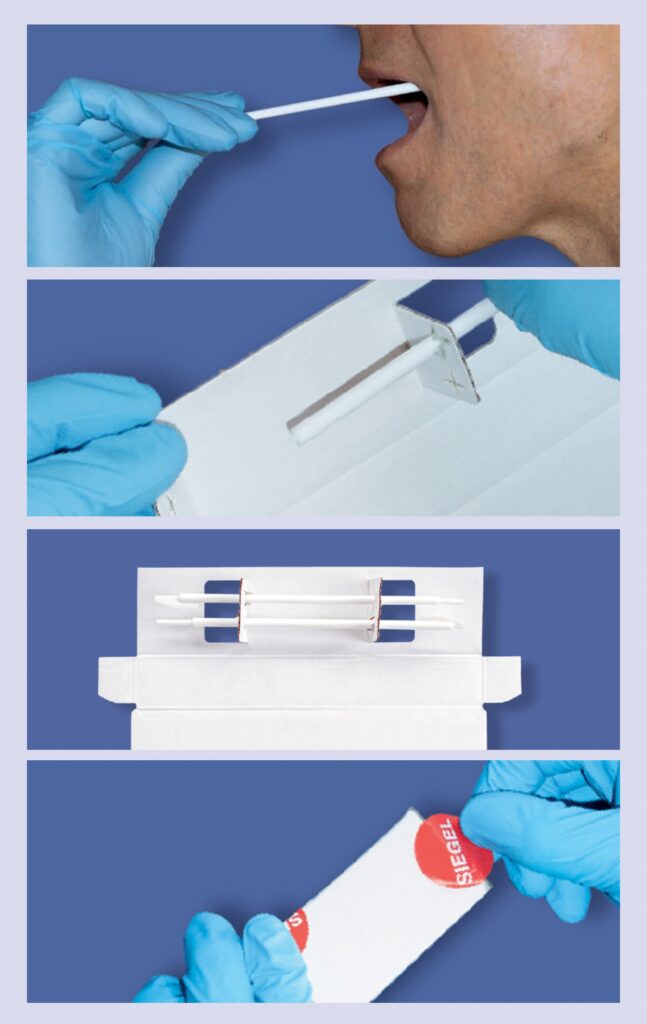
In order to protect cotton swabs from contamination after use and to allow the trace material to dry, the simplest solution is to use a water vapor-permeable outer packaging in the form of a special swab box.
This system can be used for various types of swabs. The illustration on the right shows the collection of a cheek swab (comparison samples) using abf E1-Swabs. However, trace samples can also be stored and transported in this way using standard swabs.
The swabs are delivered DNA-free in blister packs. The transport carton can also be delivered DNA-free. After the cotton swabs have been packaged, the carrier boxes are sealed with security seals.
Swab in Combination with a Ventilated Reaction Vessel
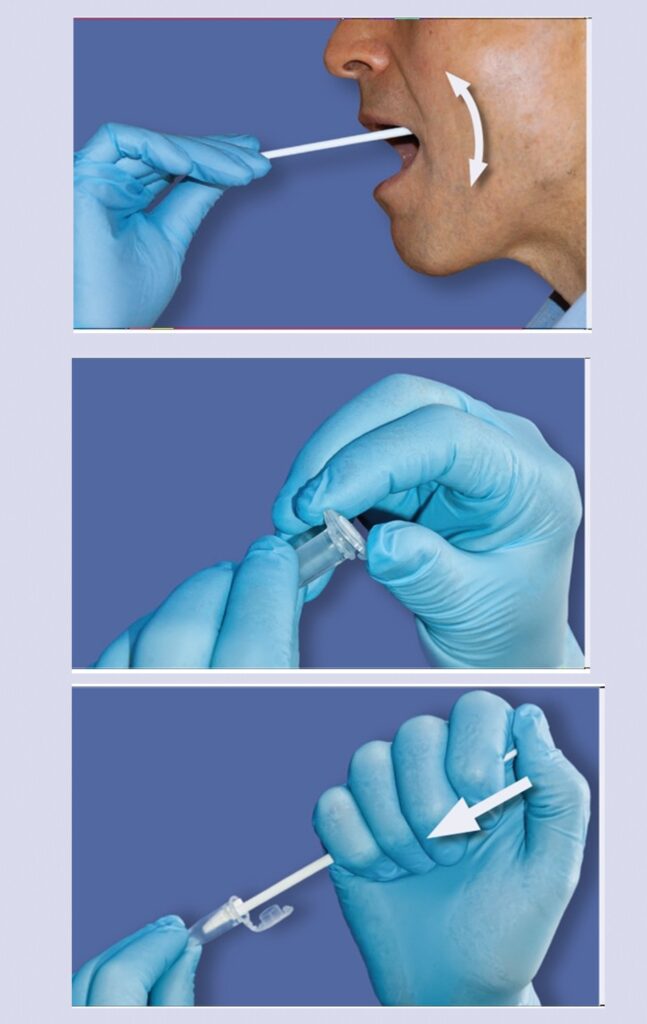
Ventilated reaction vessels are the ideal tool for drying, storing, and transporting damp cotton wool heads or small pieces of evidence.
The ventilation fleece built into the lid of the reaction vessels ensures drying of moist objects within a few hours and preservation of any traces. During the drying process, the sample material is effectively protected against contamination.
Ventilated reaction vessels can be combined with all types of cotton swabs. When using standard swabs, the cotton head must be broken off or cut off. With our disposable swabs, the cotton head can be discarded directly into the ventilated reaction vessel from the stick.
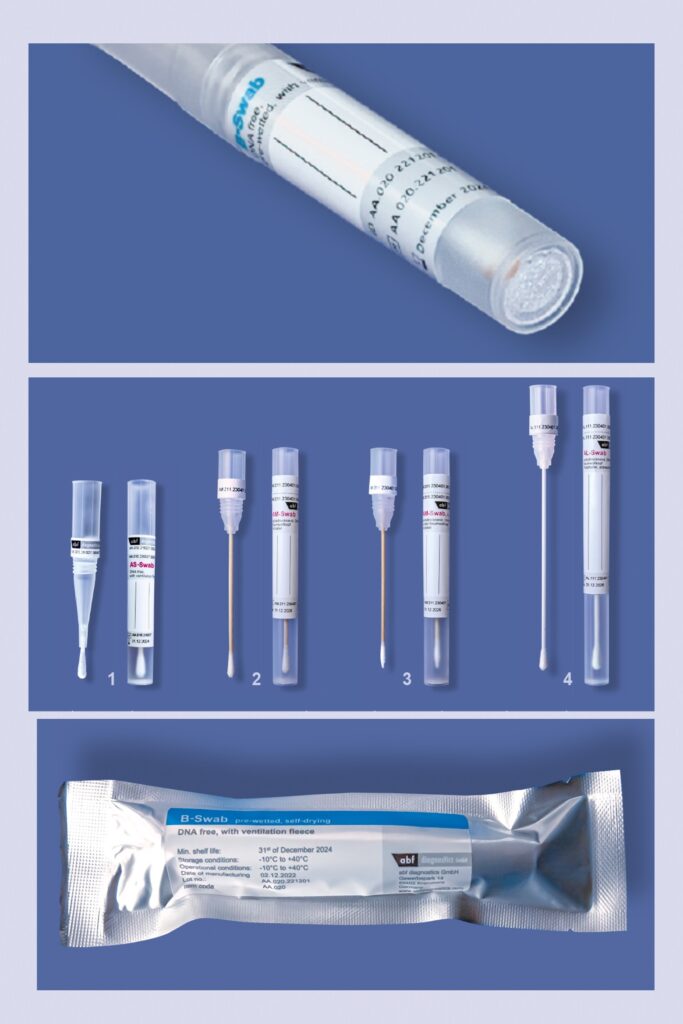
Swab with Transport Tube and Ventilation Fleece (passive Drying, A- and B-Swabs)
The state of the art is swabs in a transport tube with a self-drying function. A distinction is made here between transport tubes with a ventilation fleece/membrane (passive drying) and tubes with integrated desiccant (active drying).
In systems with passive drying, a water vapor-permeable nonwoven fabric ensures that moisture is transported from the transport tube into the environment. Compared to membranes, nonwoven fabrics have a significantly higher permeability to water vapor while offering comparable barrier properties against foreign particles containing DNA.
Our passive drying swabs (A-Swabs) are available in different versions, which vary in length, shaft material, and cotton head shape.
Our B-Swabs are pre-moistened swabs with passive drying and currently only available in the short version.
Swab with Transport Tube and Integrated Desiccant (active Drying, D-Swabs)
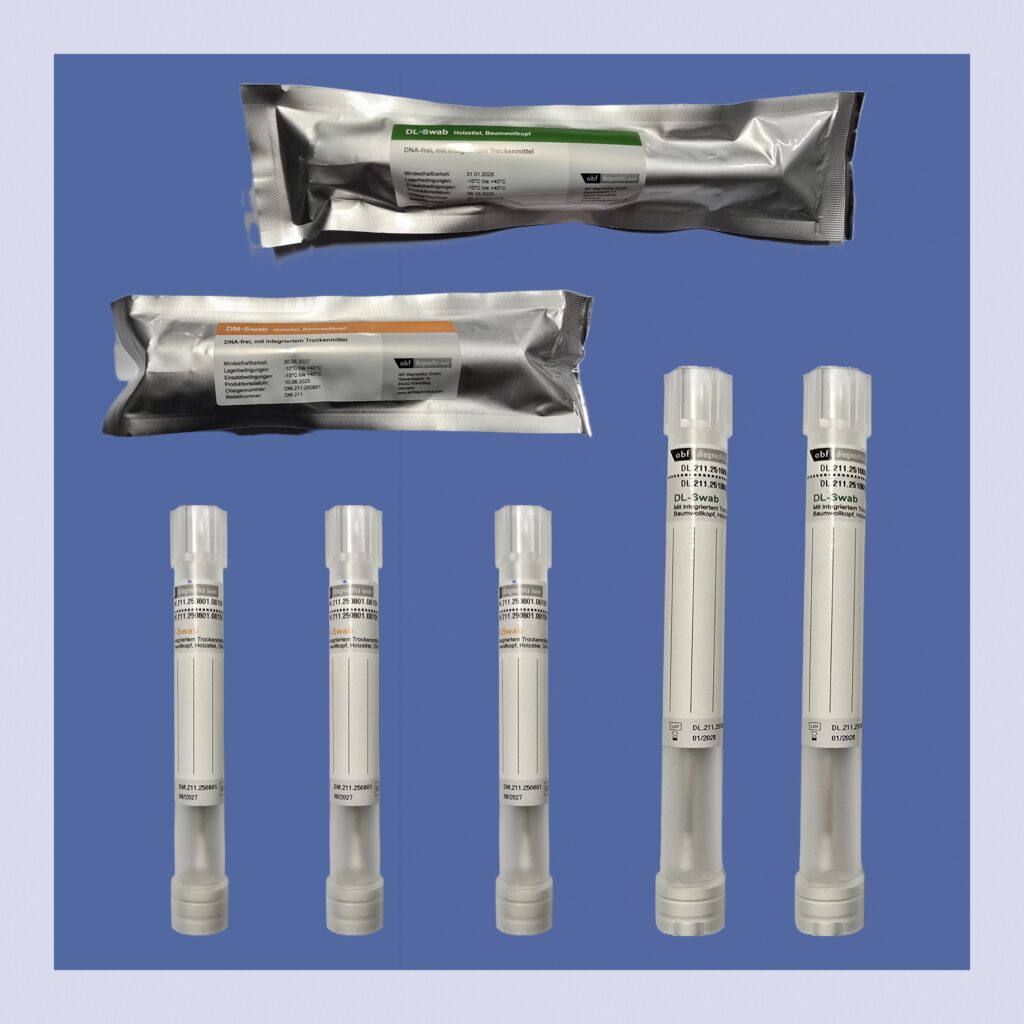
Another option for securing and preserving biological traces is swabs with integrated desiccant. In this group of forensic swabs, an integrated desiccant helps to preserve the trace material. The sample dries regardless of the environmental conditions.
One major advantage of these products is their high drying speed. The design principle of our D-Swabs allows a wet trace to be dried within 4 hours. To protect against moisture penetration from the outside, the D-Swabs are supplied in aluminum composite foil bags.
The handle has an angular shape to prevent it from rolling away. The handle and transport tube are connected using a special quick-lock thread. Each swab is marked with a unique number, which can also be read using a barcode.
Kits for Securing Evidence at Crime Scenes
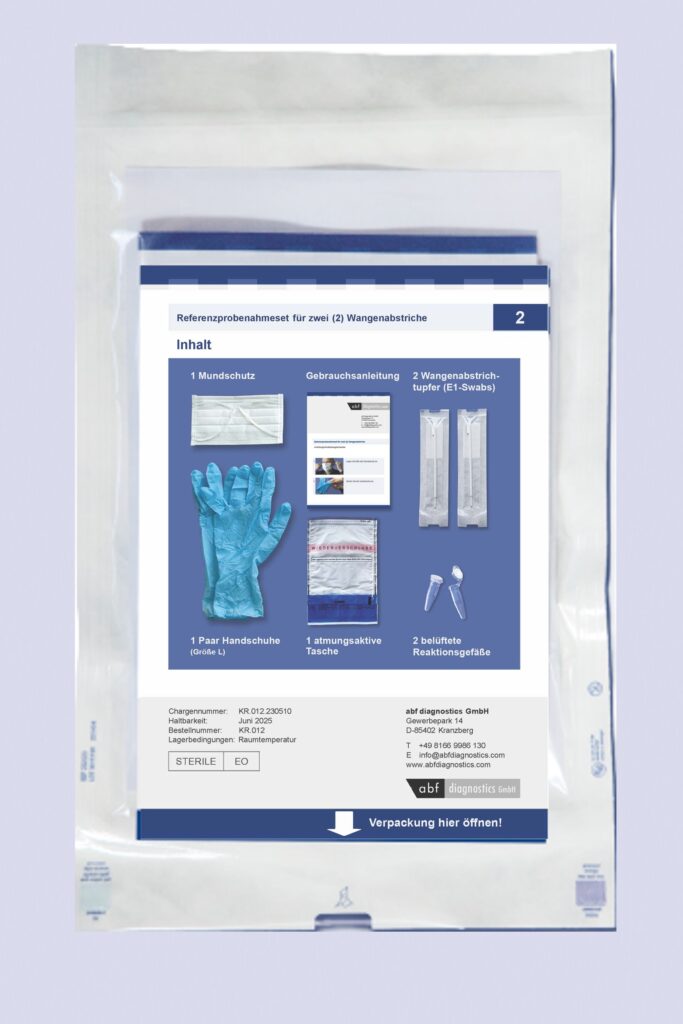
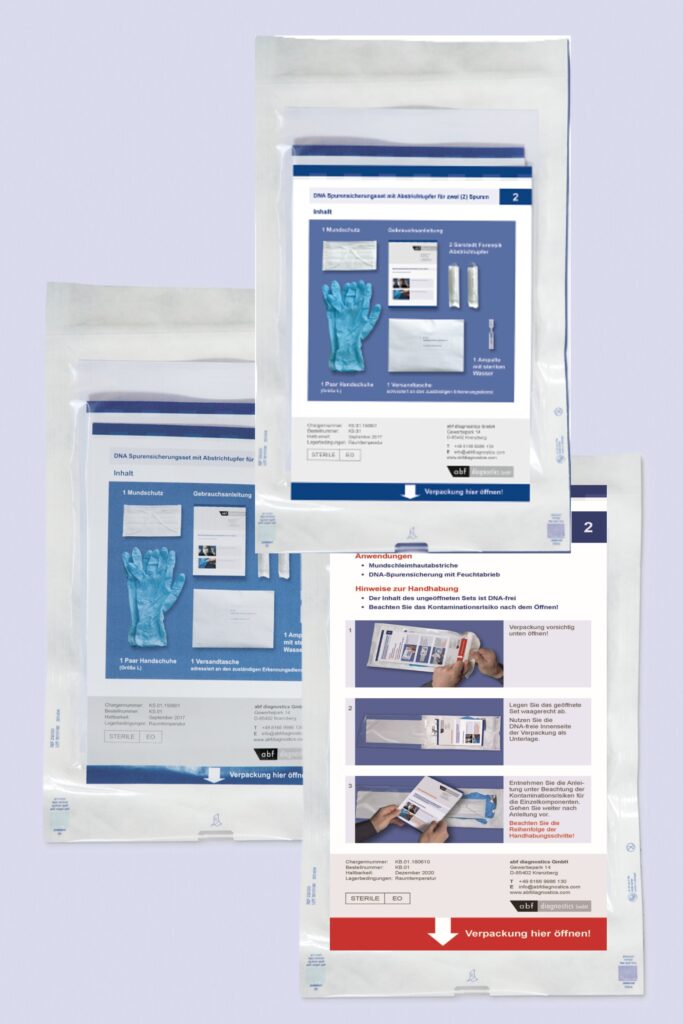
Kits for securing evidence at crime scenes offer the major advantage of all the tools needed to secure one or more pieces of evidence being contained in a DNA-free kit. All kits are packed under clean room conditions and, where technically possible, treated with ethylene oxide. If it is not possible to sterilize the entire kit, the individual parts or sub-units are sterilized and suitable processes are used to ensure that the contents of the evidence collection kits are DNA-free.
The composition and labeling of the sets are generally based on your requirements. As standard, we pack cotton swabs (alternatively adhesive stamps), gloves, face masks, shipping bags, water ampoules (for moistening the cotton swabs), and instructions appropriate to the set. Different packaging options are available depending on the intended use.
Depending on the contents of the kits, they are stored in the emergency vehicle or at the station.
Kits for Taking Comparative Samples/Reference Samples
Similar to the kits for securing evidence at crime scenes, kits for collecting reference samples are assembled and packaged according to the requirements of the subsequent users.
Common components include swabs or self-drying swabs in combination with personal protective equipment and appropriate instructions for use.